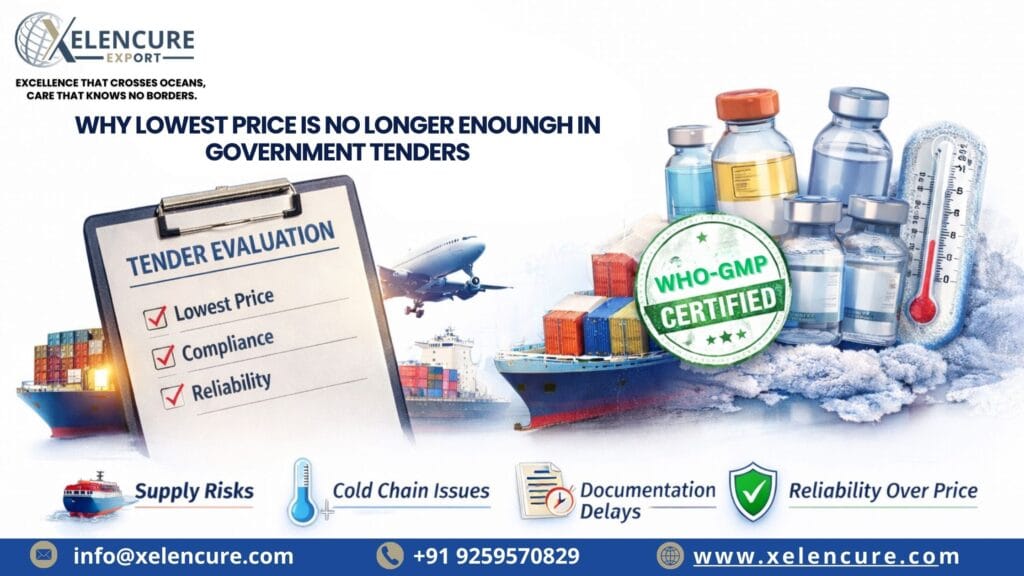
A Quiet Shift in Healthcare Procurement
Let’s be honest.
When a government tender lands on your desk, your eyes instinctively go to one place first:
The price column.
For decades, procurement followed a simple, almost sacred rule:
L1 wins. Lowest compliant bidder. End of discussion.
It looked logical.
It protected public money.
It satisfied auditors and spreadsheets alike.
But 2025 has changed the rules—without formally announcing it.
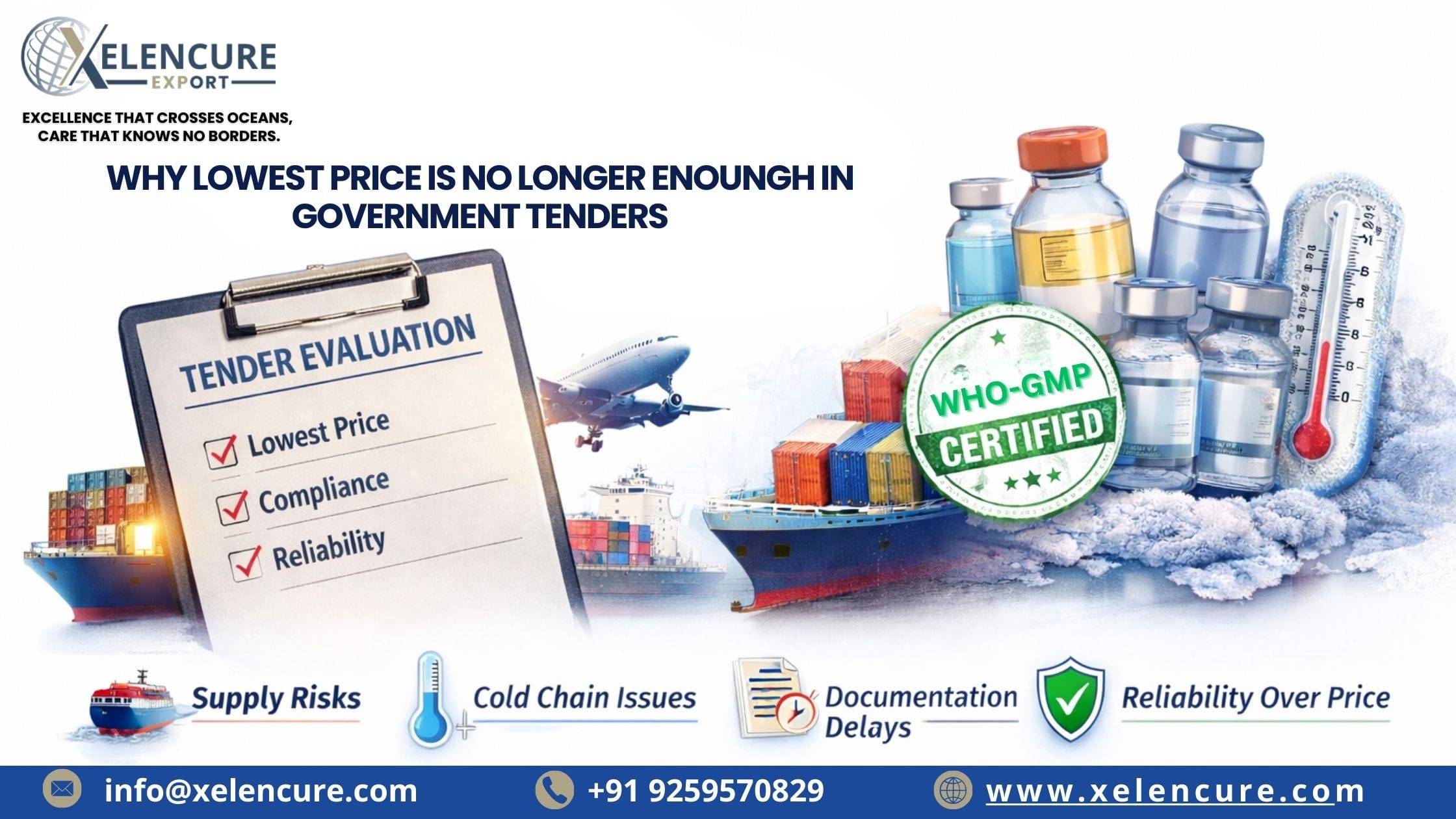
Because today, procurement is no longer about buying cheap.
It’s about buying certainty.
The Hidden Cost of “Cheap” Pharmaceutical Tenders
If you’ve worked in healthcare procurement long enough, you’ve lived this story.
A supplier bids 10–15% below the market.
The savings look brilliant.
The tender is awarded. Everyone breathes easy.
Then reality arrives.
- A shipment delay blamed on “raw material issues”
- A cold-chain consignment arrives—without usable data logs
- Customs flags mismatched batch documents
- Hospitals begin calling
- Emergency sourcing kicks in at triple the cost
What looked like savings on paper becomes the most expensive problem of the year.
And in healthcare, the real cost isn’t financial alone.
Patients pay first.
That’s why, in 2025–26, procurement thinking is evolving—fast.
What Smart Healthcare Procurement Teams Prioritize in 2026
Across ministries, hospitals, and large institutions, the evaluation lens has widened. Here’s what matters today:
📄 1. Documentation Is Now a Core Procurement Requirement
In modern tenders, paperwork doesn’t follow the shipment.
It defines whether the shipment moves at all.
A missing COA, weak GMP file, or inconsistent batch record can halt supply instantly—no matter how good the price looks.
Old mindset: “We’ll arrange documents after award.”
New reality: If documents aren’t ready before bidding, the bid isn’t credible.
Paperwork is power—and delays cost lives.
❄️ 2. Cold Chain Integrity Is Non-Negotiable
Biologics, insulin, oncology drugs, and injectables dominate today’s tenders.
Here’s the uncomfortable truth:
When suppliers slash logistics costs to win bids, product stability is what gets sacrificed first.
And temperature excursions don’t show up on invoices—but they destroy efficacy.
Validated packaging.
Real-time data loggers.
End-to-end temperature traceability.
In 2025, cold chain is no longer a “value add.”
It’s the baseline.
🤝 3. From Spot Traders to Long-Term Execution Partners
Anyone can source a batch once.
The real question procurement teams now ask is:
“Can this supplier do it again—and again—for the next 12 months?”
Markets fluctuate. APIs spike. Production schedules slip.
Winning a tender is easy.
Sustaining supply under pressure is the real test.
That’s why procurement leaders are moving away from opportunistic trading—and toward long-term execution partners.
🗣️ 4. Communication as a Procurement Risk-Control Tool
Bad news doesn’t kill tenders.
Late news does.
In 2025, transparency isn’t a courtesy—it’s protection.
Procurement teams want partners who:
- Communicate early
- Escalate issues honestly
- Answer calls when things go wrong—not just when invoices are due
Clear communication turns problems into plans.
Silence turns them into disasters.
How Xelencure Export Approaches Healthcare Tenders
Xelencure Export was built after observing a clear gap in the market.
There were plenty of manufacturers.
Plenty of traders.
But very few partners who truly own execution.
So we chose a different path:
- We don’t bid to win at any cost—we bid to deliver without failure
- Risk management is built into every quotation
- We treat tender awards as commitments, not transactions
Because a tender has value only if it can be executed—calmly, compliantly, and under pressure.
A Critical Question for Procurement Leaders in 2025–26
Before awarding your next tender, ask just one thing—beyond price:
“What happens if something goes wrong?”
- Are documents already prepared?
- Is cold-chain integrity fully validated?
- Is there a real execution plan—not just a low quote?
- Will someone pick up the phone at 2:00 AM?
Because in healthcare procurement:
The most expensive shipment is the one that never arrives.
Frequently Asked Questions
Can Xelencure match the lowest prices?
We stay highly competitive—but we never cut corners on compliance, safety, or delivery assurance to win a bid.
Do you support international government tenders?
Yes. We actively participate in hospital and ministry tenders across MENA, Southeast Asia, and Latin America.
How do you manage cold-chain risk?
Every cold-chain shipment uses validated packaging, temperature monitoring, and documented traceability from warehouse to destination port.
Let’s Build Supply Chains That Don’t Break
If you’re rethinking how suppliers should be evaluated for 2025–26, we’re always open to meaningful conversations—beyond spreadsheets.
📧 info@xelencure.com
🌐 www.xelencure.com
Because today, procurement success isn’t about who quotes the lowest.
It’s about who delivers—when it matters most.